
Nervous System Dysregulation: Why It Matters More Than You Think
You may have heard the term “nervous system dysregulation” more frequently in recent years. It can sound technical or even abstract at first, but in reality, it describes something very simple and very important:
You experience your entire life through your nervous system.
Every thought, emotion, body sensation, reaction to stress, and moment of calm is filtered through this incredible internal network. When it is regulated, you feel grounded, flexible, and resilient. When it is dysregulated, even ordinary life can feel overwhelming, exhausting, or unpredictable.
Understanding your nervous system is one of the most powerful ways to understand your health.
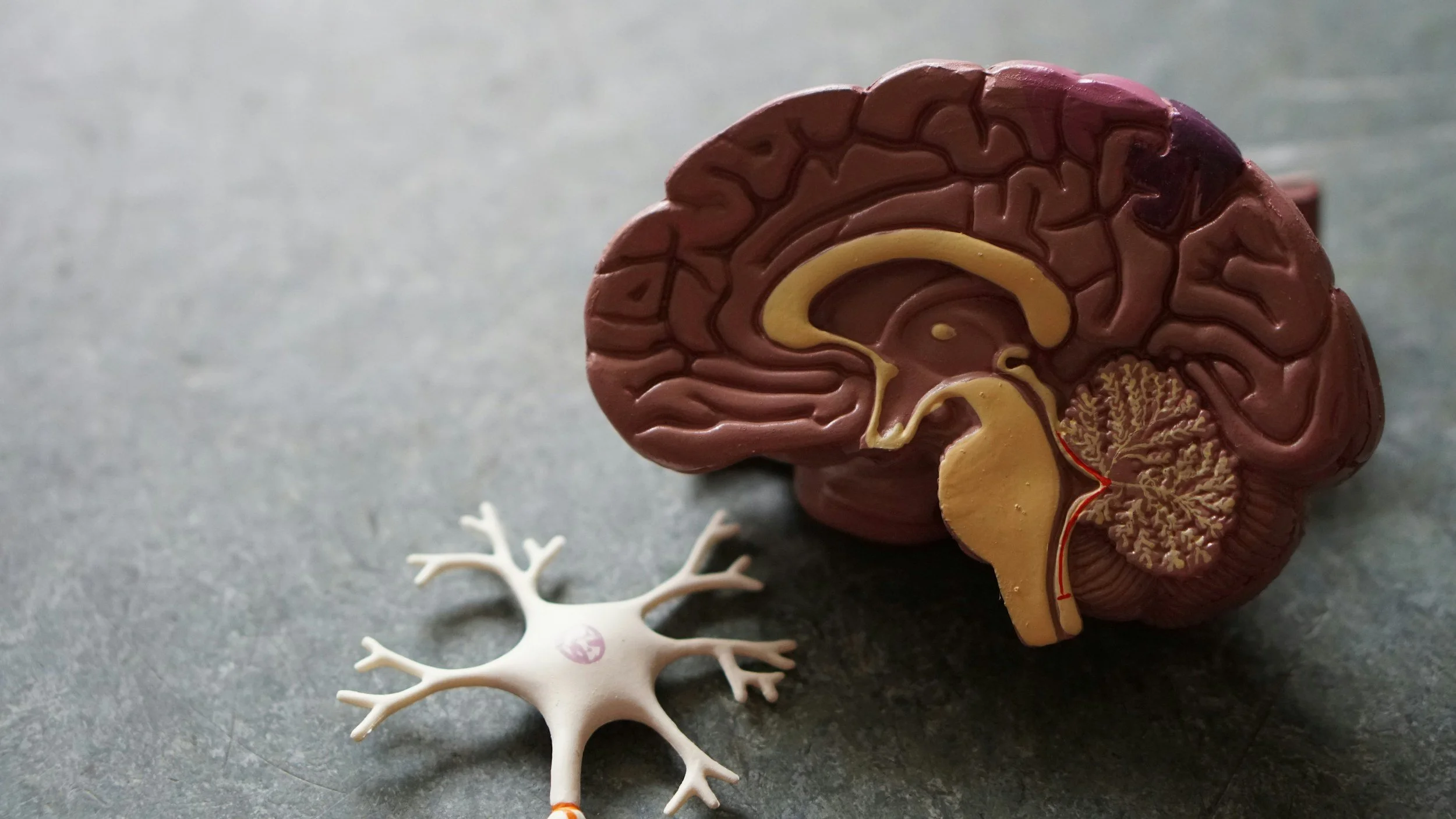
Nervous System
What Is the Nervous System?
Your nervous system is the body’s communication and control network. It is responsible for sending, receiving, and interpreting signals between your brain and body. It influences everything from movement and breathing to emotions, memory, digestion, and stress response.
It is typically divided into two major parts:
1. Central Nervous System (CNS)
The central nervous system includes:
The brain
The spinal cord
This is the command centre of the body. It processes information, makes decisions, and coordinates responses. Every sensation you feel and every action you take is ultimately interpreted through the CNS.
2. Peripheral Nervous System (PNS)
The peripheral nervous system includes all the nerves that branch out from the brain and spinal cord into the rest of the body.
It acts like a vast communication network, carrying messages:
From the body to the brain (sensory input)
From the brain to the body (motor output)
This system is what allows you to feel temperature, pain, touch, movement, and internal body signals.
The Autonomic Nervous System: The Hidden Regulator
Within the peripheral nervous system sits a very important subsystem called the:
Autonomic Nervous System (ANS)
This system operates largely outside of conscious control. You don’t have to think about it, it runs automatically in the background, managing essential functions like:
Heart rate
Blood pressure
Digestion
Temperature regulation
Stress response
The autonomic nervous system has two main branches:
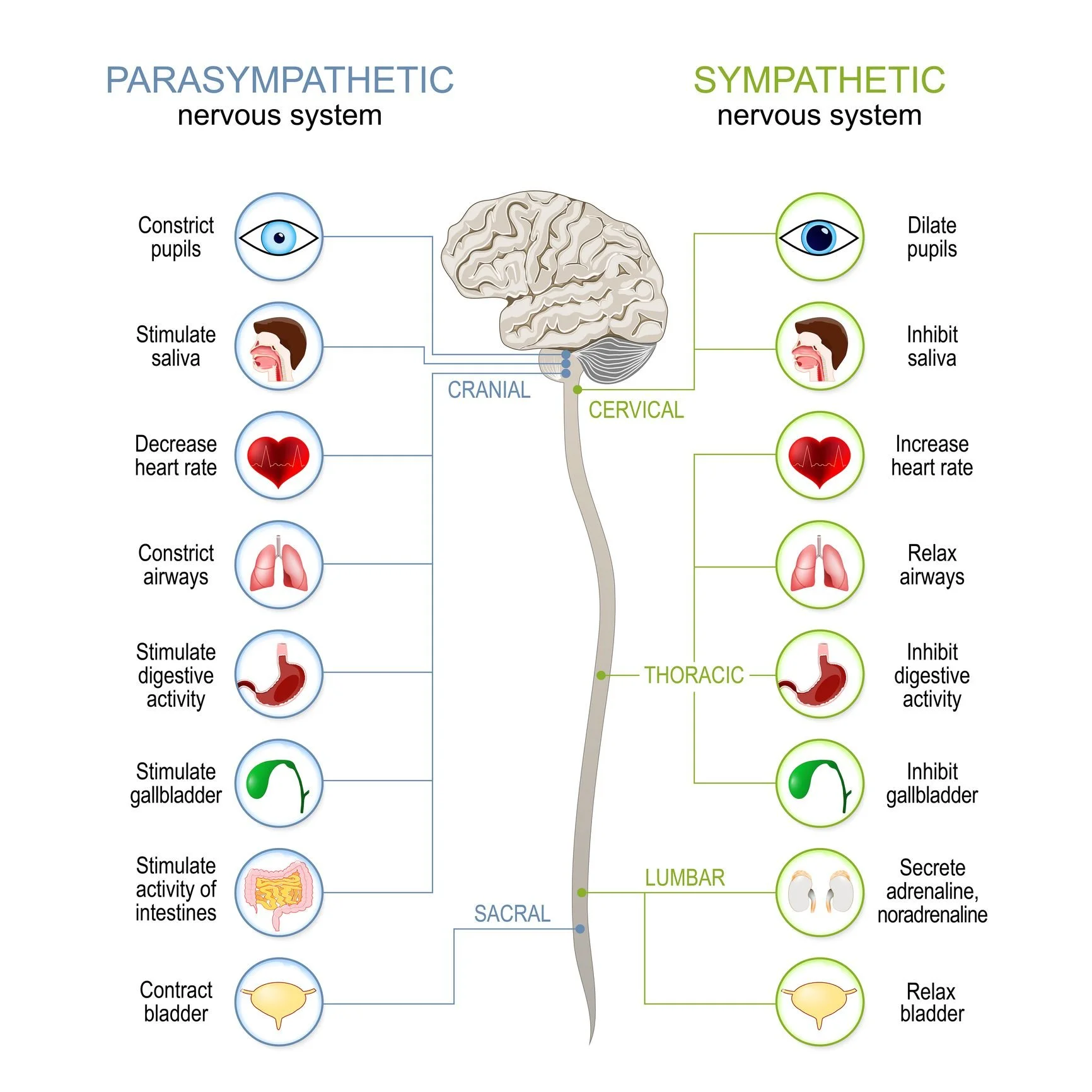
Source: Minnesota Personalized Medicine
Sympathetic Nervous System (“Fight or Flight”)
This is your activation system. It prepares your body to respond to perceived danger or stress.
When activated, you may notice:
Increased heart rate
Faster breathing
Heightened alertness
Muscle tension
Reduced digestion
This system is essential for survival. It helps you respond quickly to challenges and stay alert when needed.
However, in modern life, it can become overactive due to chronic stress, emotional pressure, trauma, poor sleep, or overstimulation.
When this happens, the body can feel like it is constantly “on,” even when there is no real danger present.
Parasympathetic Nervous System (“Rest and Digest”)
This is your calming and recovery system.
When activated, it supports:
Slower heart rate
Deep breathing
Improved digestion
Tissue repair
Emotional calm and restoration
This is the state where healing, recovery, and resilience are built.
A healthy nervous system is not about being calm all the time—it is about being able to move flexibly between activation and rest.

Nervous System Dysregulation: What Does It Mean?
Nervous system dysregulation happens when the body has difficulty shifting appropriately between sympathetic and parasympathetic states.
Instead of moving fluidly between stress and calm, the system can become:
Stuck in over-activation (anxiety, tension, restlessness)
Stuck in shutdown (fatigue, numbness, low motivation)
Or swinging unpredictably between both
This is not a character flaw or a lack of discipline. It is a physiological pattern in the body’s stress circuitry.
Over time, dysregulation can affect:
Sleep quality
Mood stability
Digestion and gut health
Pain perception
Energy levels
Immune function
The key point is this:
Your nervous system shapes how you experience your life.
Why This Matters
When people hear “nervous system dysregulation,” they often think it only applies to extreme cases. In reality, many everyday experiences are related to it, including:
Feeling constantly “on edge”
Difficulty relaxing even when tired
Brain fog or mental fatigue
Irritability or emotional overwhelm
Poor sleep despite exhaustion
Physical tension without clear injury
Understanding this gives a new perspective: instead of asking “What’s wrong with me?” it becomes more useful to ask:
“What state is my nervous system in right now?”
That shift alone can change how you approach healing.
Simple, Free Tools You Can Start Today
When stress becomes chronic, your brain and body can get stuck in “fight, flight, or freeze” mode. The good news is that small daily habits can help signal safety to your nervous system and build resilience over time.
1. Slow Your Breathing 🌿
The vagus nerve is closely connected to your breathing.
Try this:
Inhale through your nose for 4 seconds
Exhale slowly through your mouth for 6–8 seconds
Repeat for 3–5 cycles (or more if needed)
Practice slow belly breathing
Why it works:
A longer exhale helps activate your parasympathetic (“rest and digest”) nervous system, sending a signal of safety to the brain and body.
2. Stimulate Your Vagus Nerve 🎵
The vagus nerve is one of the main pathways that helps your body shift out of stress mode and into regulation.
Try one of these:
Hum your favorite song
Sing along to music
Gargle water for 30 seconds
Why it works:
These actions stimulate branches of the vagus nerve in the throat and vocal system, helping promote a calmer, more regulated internal state.
3. Take a Walk 🚶♀️
Movement is one of the simplest and most effective ways to regulate the nervous system.
Try this:
Walk for 5–10 minutes
Leave your phone at home (or use it only for a walking meditation)
Notice what you see, hear, and feel around you
Imagine letting the “stuff” you are carrying fall behind you with each step
Why it works:
Rhythmic movement helps regulate both the brain and body, supports stress hormone metabolism, and encourages a return to baseline calm.
Bringing It All Together
Nervous system dysregulation is not something separate from your health—it is central to it. Every function in the body is influenced by how safe, stable, and adaptable your nervous system feels.
The goal is not perfection or constant calm. The goal is flexibility:
The ability to activate when needed
The ability to recover when safe
And the ability to return to balance with greater ease over time
Small daily practices matter. Over time, they teach the nervous system something powerful:
Safety is possible again.